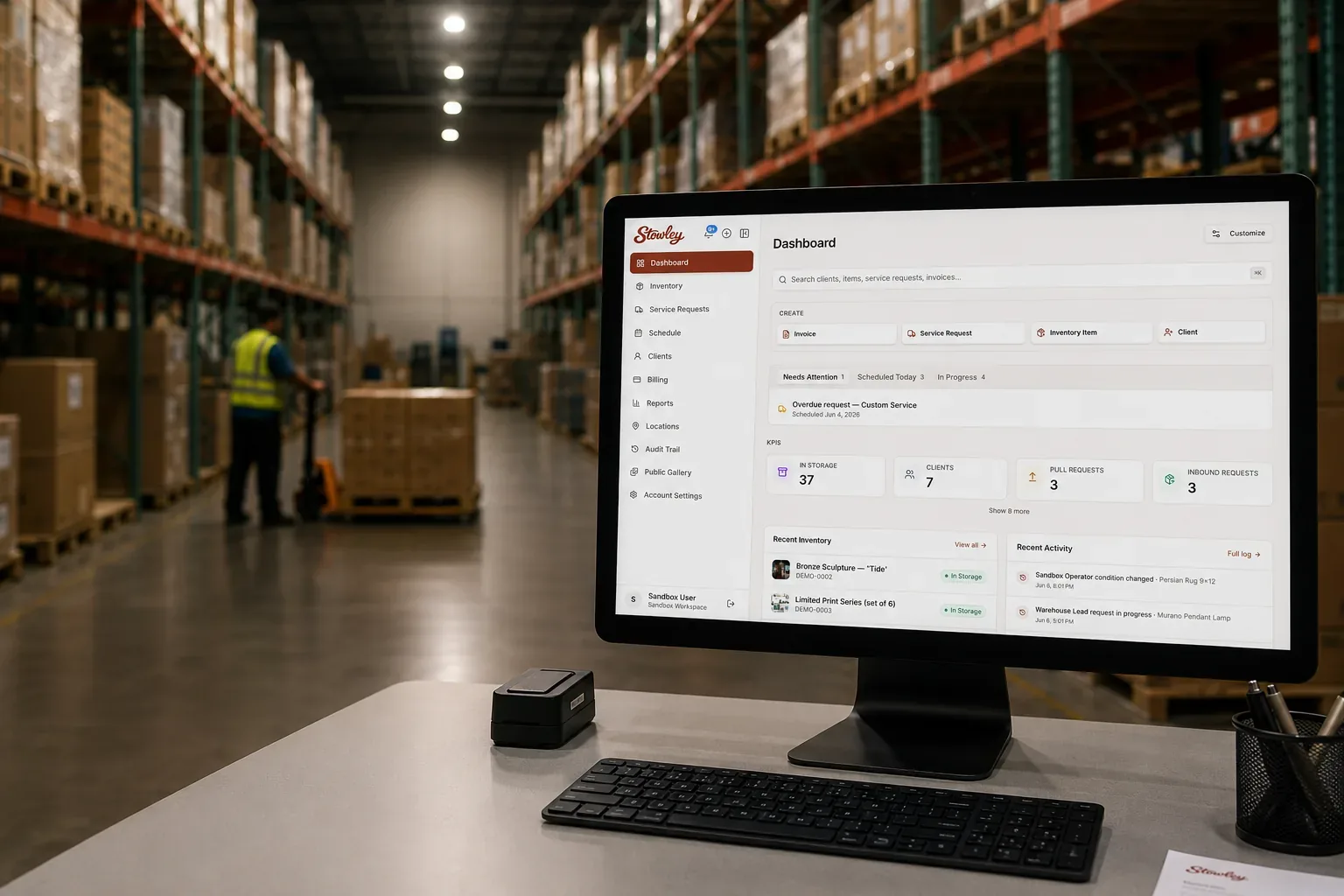
Branded Client Portals for Boutique 3PLs: The Quiet Differentiator in 2026
A polished, branded portal is no longer a nice-to-have for third-party logistics. It's how clients evaluate, choose, and stay.

Five years ago, a boutique 3PL could win a client over a long lunch. The logistics were a leap of faith, the client trusted the operator, signed a contract, and hoped for the best. The reporting was monthly, by email, with a PDF attached. The relationship was warm but opaque.
That world is mostly gone. Today, when a brand evaluates a 3PL, the first question they ask is some version of "can I see my inventory whenever I want?" If the answer is "we'll send you a report every Friday," they're already comparing you to the operator down the road who said yes. The branded client portal has quietly moved from a nice-to-have to a baseline expectation.
What clients actually want from a portal
The list isn't long, but it has to be right:
- Real-time inventory levels by SKU and location.
- Order status for outbound shipments, including tracking.
- Inbound visibility for incoming POs and what's been received.
- Document access for invoices, packing lists, and condition reports.
- A way to send a message without writing a new email thread.
That's the whole feature set most clients ever use. What separates a usable portal from an embarrassing one is not the feature count. It's the polish, the speed, the design, the fact that the data is correct, and the fact that the client's brand sits at the top instead of the operator's.
Why branding it for the client matters
A portal that loads with your 3PL's logo at the top is a portal the client will use begrudgingly. A portal that loads with their logo, in their colors, on a subdomain that feels like part of their stack, is a portal they'll show to their own investors as evidence of operational maturity. That's not vanity, it's the difference between being a vendor and being part of the brand.
The economic effect is real. White-labeled portals are the single most-cited reason clients renew with boutique 3PLs over larger competitors. The bigger operators usually can't or won't customize the experience down to the per-client level. A boutique that can do this credibly punches well above its weight.
What a bad portal does to your operation
A weak portal isn't neutral; it actively damages the relationship. Each time a client logs in and sees stale data, they reach for the phone. Each time they can't find an invoice, they email the operator's accounting contact. Each time the inventory count is off by one, they wonder what else is wrong.
The portal isn't a side project. It's a load-bearing part of the operation. It absorbs the routine questions that would otherwise consume your team's day. The math works only if the portal is genuinely trusted; otherwise, it's a worse version of the customer service team it was supposed to relieve.
The implementation pattern that actually works
Boutique 3PLs that have rolled this out successfully follow a similar pattern. They don't build the portal. They use a platform that provides one and customize it per client. The client gets a subdomain, their own logo, their own brand color, and a permission scope that ensures they only ever see their own data. Onboarding a new client to the portal takes minutes, not weeks, because the platform handles the heavy lifting.
The same platform usually generates the invoices the portal displays, the documents it stores, and the messages it routes. That tight integration is what keeps the portal trustworthy. A standalone portal that pulls data from a separate operational system will eventually drift, and the drift is what kills client confidence.
The strategic point
The reason this matters more for boutique 3PLs than for the giants is that the boutique market is, increasingly, a service-experience market. Clients pick operators based on how the relationship feels, week to week. The portal is the daily expression of that relationship, the thing the client interacts with on Tuesday afternoon when they want to know if a shipment landed. Get that experience right, and the contract renews itself. Get it wrong, and you'll keep losing renewals to operators whose warehouses are no better than yours but whose software made the client feel taken care of.
The good news is that the gap is closing. The platforms that boutique 3PLs need to compete here are now off-the-shelf. The decision isn't whether to invest in a portal anymore. It's how quickly you can roll one out before your competitors do.
Frequently asked questions
What is a branded 3PL client portal?
A white-labeled web portal where each of a 3PL's clients sees their own inventory, orders, invoices, and documents — under their own brand and color, often on their own subdomain. The platform handles the per-client scoping automatically.
Why do clients prefer white-labeled portals?
A portal in their colors feels like part of their stack — something they can show to their own investors as evidence of operational maturity. A portal stamped with the 3PL's logo feels like a vendor dashboard, which clients use begrudgingly.
What features should a 3PL client portal include?
Real-time inventory by SKU and location, outbound order status with tracking, inbound PO visibility, document access for invoices and packing lists, and a way to send a message without starting a new email thread.
Can a boutique 3PL afford a custom portal?
Not as a build — that would cost six figures and require ongoing engineering. As a feature of a modern 3PL platform like Stowley, white-label portals come included and onboard in minutes per client.
How long does it take to onboard a client to a branded portal?
Minutes, not weeks. Logo, brand color, subdomain, permission scope. The platform handles the heavy lifting; the 3PL's team just enters the client's brand assets.
Do clients still need email communication if there's a portal?
Yes, but volume drops dramatically. Routine 'what's my inventory' and 'did this arrive' questions move to the portal, freeing up your team to handle the higher-value conversations.