A Repeatable Playbook for Onboarding New 3PL Clients
Most 3PLs lose money on the first ninety days of every new client because onboarding is improvised. A repeatable playbook fixes that.

Most 3PLs treat onboarding as a one-off project that happens whenever a new client signs. The contract gets signed on a Friday, the operations team finds out on Monday, and the next ninety days are improvised. Documents live in email, expectations live in someone's head, and the first invoice is wrong because nobody wrote down what the client was actually charged for.
This pattern is so common it's invisible. It's also where most boutique 3PLs leak the most money, because the unprofitable client isn't usually the small one, it's the new one who took twice as long to onboard as quoted.
A repeatable onboarding playbook fixes this. It doesn't have to be complicated. It does have to be written down, owned by one person, and run the same way every time.
The five phases of a clean onboarding
A workable playbook breaks the work into five named phases. Every new client moves through them in order, and the status is visible to everyone on both sides.
- Phase 1: Commercial close. Contract signed, rate card finalized, services-in-scope documented, billing contact identified, payment method on file.
- Phase 2: Operational discovery. SKU list, packaging specs, expected receipt volume, expected outbound volume, special handling requirements, integration list.
- Phase 3: Systems setup. Client account created in the warehouse system, branded portal provisioned, billing items configured per the rate card, integrations connected and tested.
- Phase 4: First receipt. Inbound PO received and put away under the new client's account, photos captured, inventory counts confirmed and shared.
- Phase 5: First outbound and first invoice. First order picked, packed, shipped, and tracked end to end. First invoice generated automatically from actual activity and reviewed with the client before sending.
Each phase has an owner, an estimated duration, and a checklist of completed-or-not items. When a phase stalls, it's visible immediately, and the person who has to act knows it's their move.
What to write down in the discovery phase
Phase 2 is where most onboardings quietly go wrong. The salesperson made promises during the deal that nobody captured. The right discovery document forces every promise into one of three buckets: included, available as add-on, or out of scope. Specifically, write down:
- What gets received, how often, in what format.
- How items are stored: bin, shelf, pallet, climate-controlled, secured.
- Order cutoffs and SLAs by service level.
- Returns process and who pays for what.
- Reporting cadence and recipients.
- Integration endpoints, credentials, and who maintains them.
- Anything the client said is a "deal breaker" if it goes wrong.
This document becomes the source of truth for the next twelve months. When a dispute comes up, you don't re-litigate, you read the doc.
Why the first invoice has to be reviewed live
The single highest-leverage step in the whole playbook is reviewing the first invoice with the client over a video call before sending it. Two things happen in that meeting that never happen otherwise.
First, you catch billing setup errors while they're still cheap to fix. A miscoded pick fee on invoice one becomes a quarterly credit memo if nobody flags it now. Second, the client sees exactly how the math works, which builds trust and dramatically reduces "what is this charge" emails for the next year. The thirty minutes you spend on this call saves three hours a month forever.
Where software actually helps
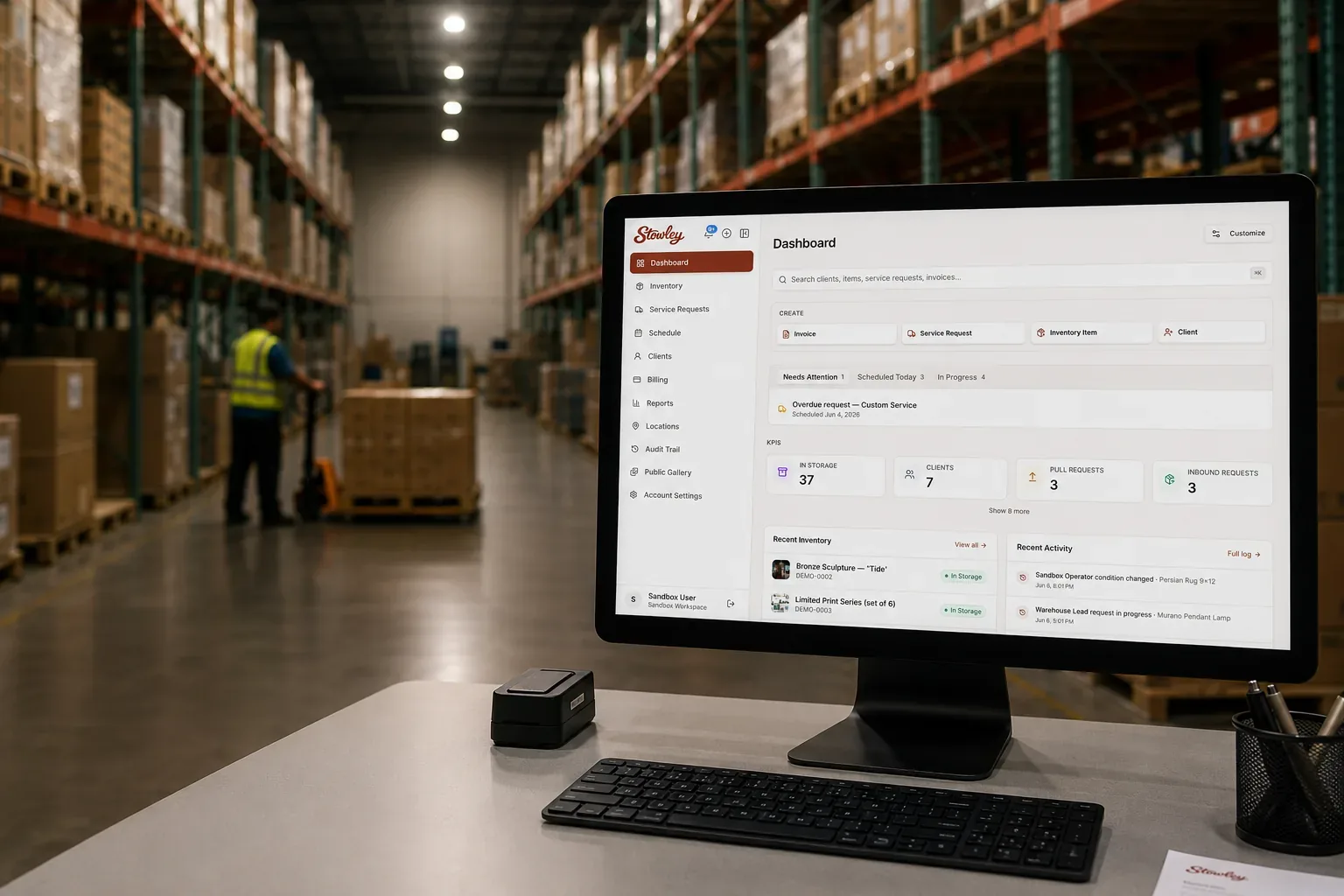
A playbook on paper is better than no playbook. A playbook inside the same system that runs the operation is dramatically better. The right 3PL software lets you template the onboarding sequence, attach it to the new client account on contract signing, and track every phase in the same place where the operational data lives. The result: the operations manager opens one screen and sees which clients are mid-onboarding, what's blocking each, and what the financial impact of any slippage is.
What changes after you commit to the playbook
The first time you run a real onboarding playbook end to end, two things usually surprise people. Onboarding gets faster, because nobody is re-inventing the steps, and onboarding gets less stressful, because the client always knows what phase they're in and what's next.
The deeper change shows up in retention. Clients who had a clean first ninety days renew more often, expand into more services, and refer more business, because the relationship started with competence instead of chaos. Onboarding isn't admin work. It's the most important sales call you'll have with that client, stretched over three months.